
10 Quick Ways to Spot AI-Generated Videos Without Being Clairvoyant
Current Methods to Detect Digital Fakery From Deepfake Scams to Fake News.

Doh! It’s Not Real, It’s Deepfake!
I remember the first time I was a total sucker for a deepfake video. It was a video of Jim Carrey playing the Jack Nicholson part in The Shining. Jim Carrey is such an amazing actor that I assumed he was lip-syncing the part and had perfectly captured all the mannerisms. I thought it was such an amazing performance that I blasted it out on my socials in praise….first Andy Kaufman…now Jack Nicholson!
A few seconds later, a friend comments, “That’s a deepfake.”
I had been punk’d.
I immediately took down the post, feeling slightly embarrassed. However, that emotion quickly subsided into a feeling of utter fear. After Googling the word “deepfake,” I thought, if someone can make THIS, how can we trust ANY video again?
deepfake /ˈdēpˌfāk/ noun
a video of a person in which their face or body has been digitally altered so that they appear to be someone else, typically used maliciously or to spread false information.
The Shining deepfake video came out in 2019. Now, rewatching the video, I can see the obvious signs of digital hocus pocus.
How did I not see that?
It totally looks fake.
Was it just smaller on my phone?
Was it like a magic trick where my focus was distracted?
Or since 2019, have I become a more sophisticated digital sleuth?
It’s similar to when I saw King Kong in the theater. In the 1970s, Kong’s giant hand looked so scary as he scooped up the scantily clad Jessica Lange. Whereas now, those scenes of Kong’s puppet-like grip are laughably hokey (but I still love this movie).
As technology improves, our eyes become more discerning and our BS detector starts flashing brighter. AI-generated video is rapidly becoming so believably realistic that it is challenging for our brains to keep up with that pace.
Guide to Spotting AI-Generated Videos (Before They Fool You)
As technology gets better, these techniques will morph; be vigilant and always look at video with skepticism.
AI video is moving fast — sometimes jaw-droppingly real, other times clumsy enough to make you laugh. The trick is knowing the signs that tip you off when something is synthetic. Think of this as your toolkit: a way to cut through the illusion and decide if what you’re watching is authentic or algorithmic fakery.
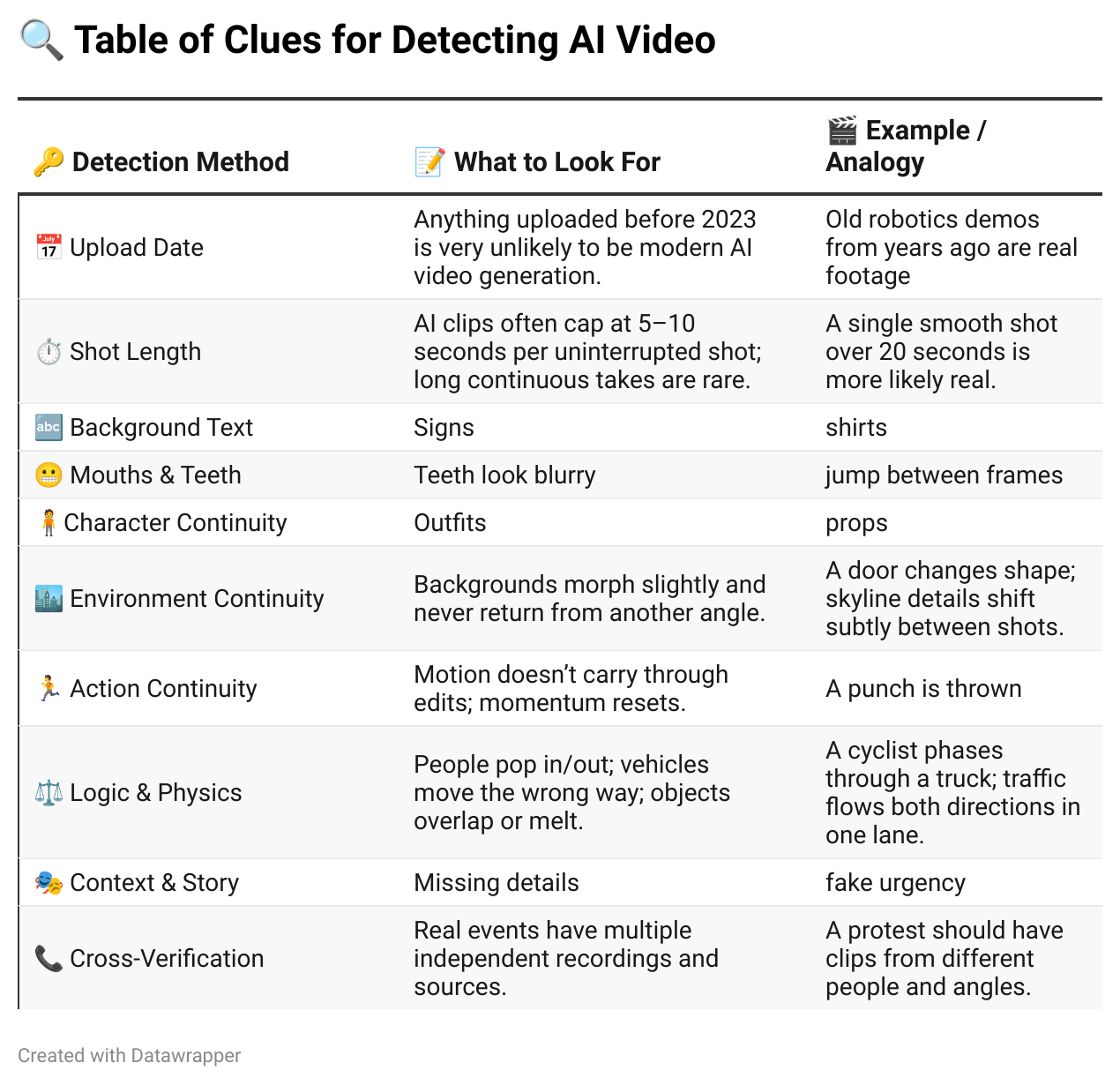
AI-generated videos are improving so rapidly that today’s unusual glitches (such as one continuous tooth or scribbly text) may disappear tomorrow. The long-term defense isn’t just spotting visual quirks — it’s vigilant skepticism and constant cross-checking of sources.
Bottom line: don’t trust ANY video, assume they’re all fake until you know you can trust it is real. No matter how legit it appears, believe the content only if it can be verified through context, multiple sources, or direct confirmation.
Think of it like a magic trick…
The better the illusion gets, the more you need to study the sleight of hand.
And it is going to get harder….
like trying to figure out how in the world Chris Angel can levitate!!!